
Future-proof farming program
Curious what we can do for you? Contact Patty Penterman: patty.penterman@vreugdenhil.nl
The program incorporates the principles of regenerative agriculture. Examples include more sustainable use of soil and water, and increasing biodiversity around the farm. Tomorrow's Dairy involves scientists from Wageningen University & Research to share knowledge about the measures to be taken and about monitoring. WUR supports farmers in developing an approach that can be widely applied. This enables every farmer to create a customized plan and implement it effectively.
The aim of the program is to enable the transition to a dairy sector with a 50% lower milk footprint by 2030 (compared to 2018). This transition is based on regenerative agriculture principles. We provide farmers with intensive guidance. They learn from each other and from the knowledge gained during the workshops.
Nestlé and Vreugdenhil finance the investments needed to reduce greenhouse gas emissions. Together, we are investing more than 50 million euros in the Tomorrow’s Dairy program.
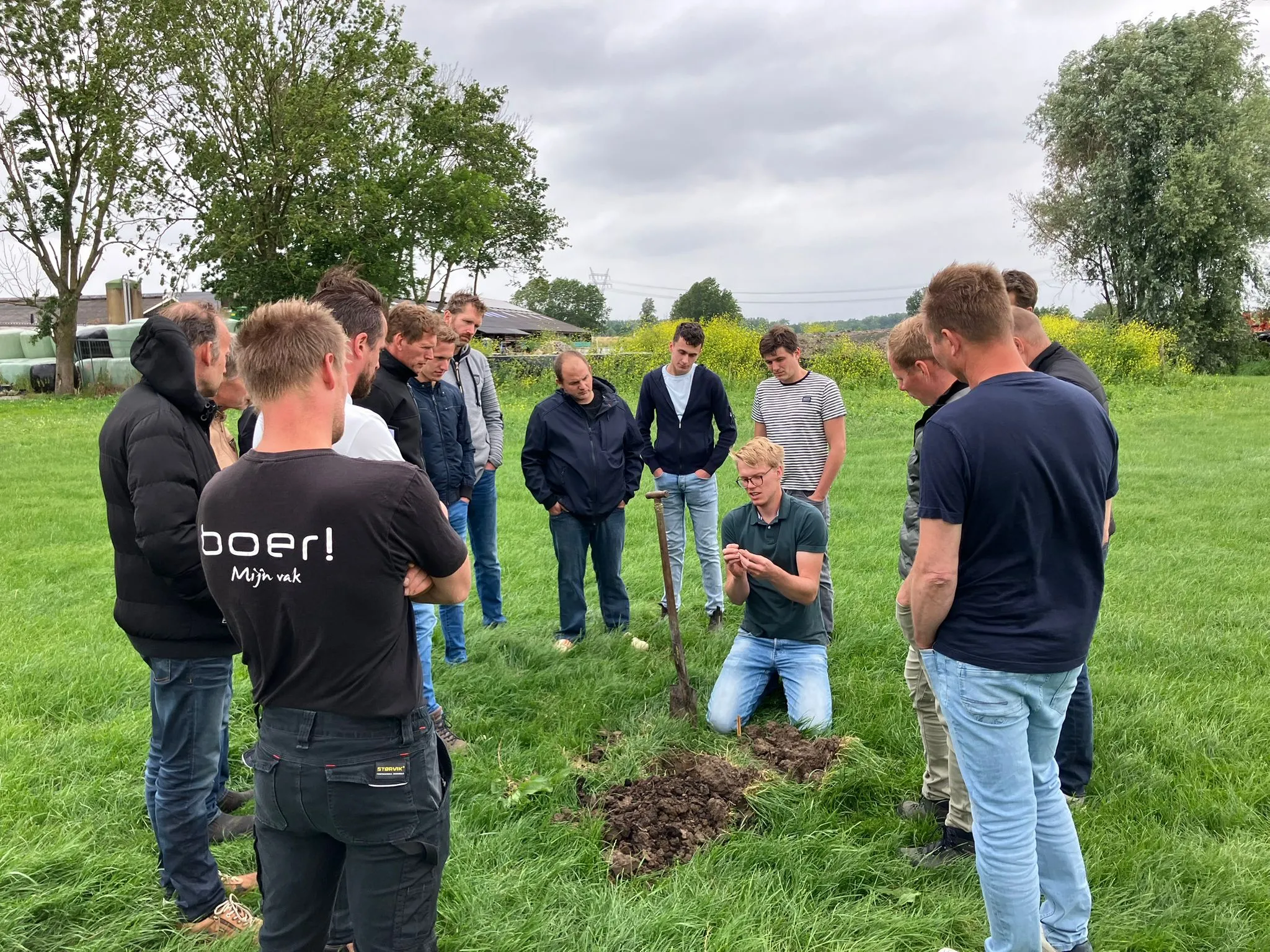
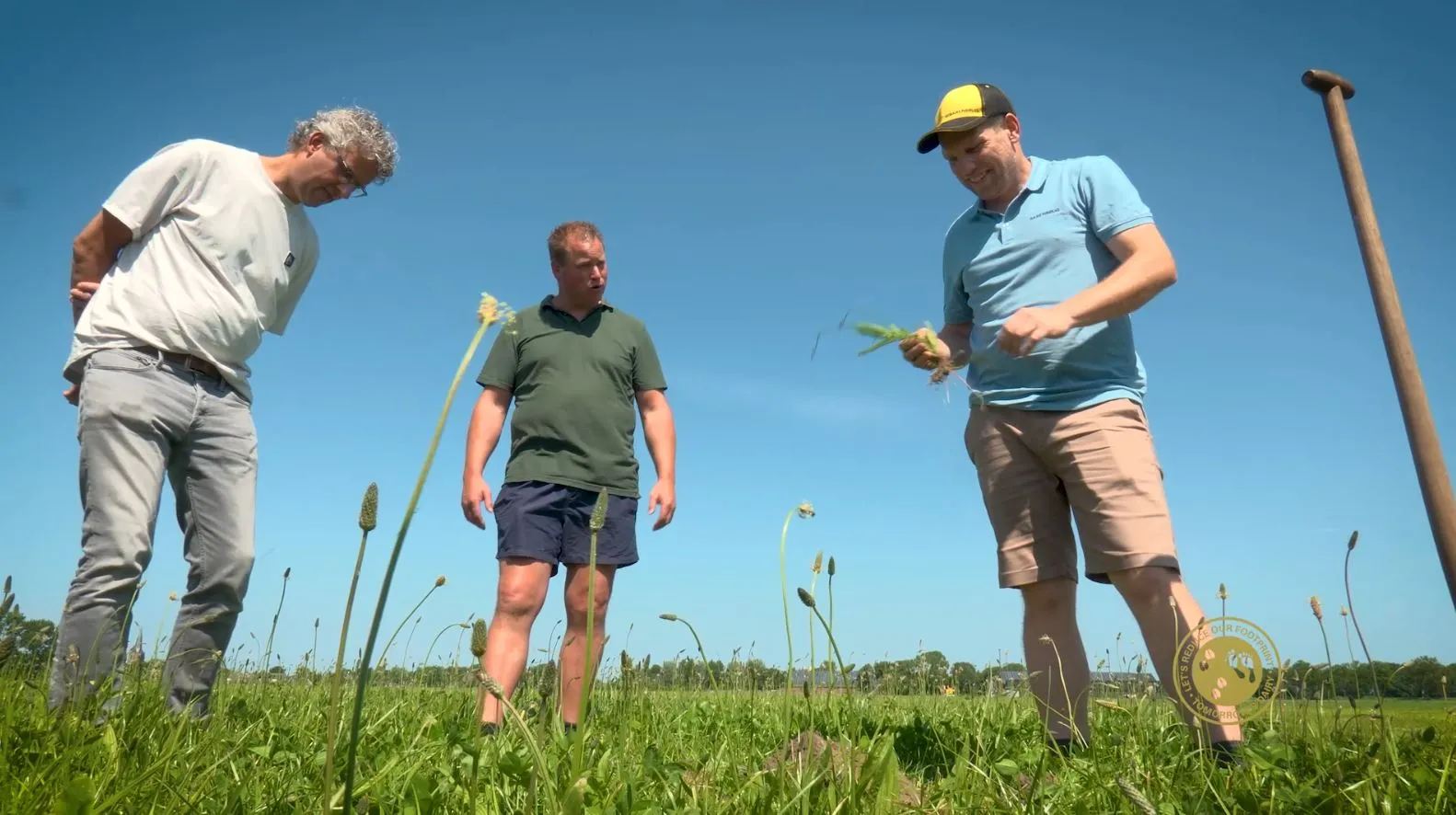
In the transition farmers are making within their business, they remain in control. Every farm is different and therefore requires a tailored approach. Farms vary in soil type (clay, peat, and sand) and in strategy (from intensive to extensive). We create tailor-made advice in collaboration with the farmer. Ultimately, the farmer decides which measures will be incorporated into the farm’s operations.
To achieve greenhouse gas reduction, collaboration across the entire supply chain is essential. That is why crop specialists, feed suppliers, seed suppliers, technology providers, banks, and agricultural advisors work closely together. For these partners as well, regenerative agriculture and circularity are key starting points for the dairy sector of the future.
In 2022, we started with a small group of 17 enthusiastic pilot farmers. By 2026, more than 150 dairy farmers are participating. These farmers receive support and financial assistance to make the transition to dairy farming with 50% lower greenhouse gas emissions.
We follow the learning-by-doing principle. The scientific foundation provided by Wageningen University & Research forms the basis for the measures taken on the farms. The knowledge and practical experience gained by the early participants are passed on to farmers who joined later. This allows us to help farmers make the transition more effectively and more rapidly over time.
Curious what we can do for you? Contact Patty Penterman: patty.penterman@vreugdenhil.nl